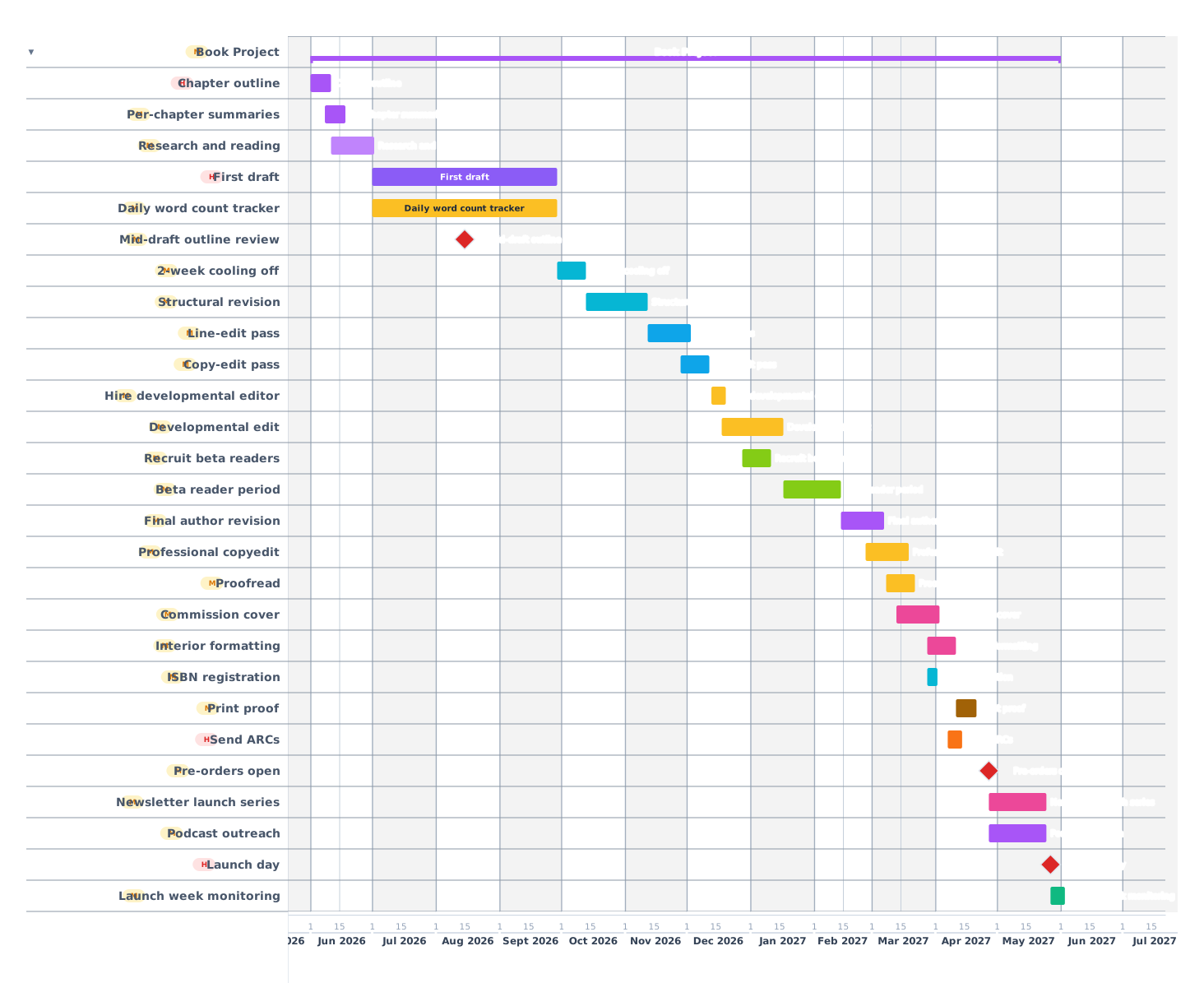
A 12-month book project covering outline, draft, edit, beta readers, cover design, formatting, ARC and launch, for authors self-publishing or pitching agents.
Most first books take 2–3 years instead of 12 months because the writing phase has no fixed deadline and quietly stretches forever. This 12-month template forces structure: 3 months to draft, 3 months to revise, 3 months for professional editing and beta readers, 3 months for cover, formatting, ARC, and launch. Adjust the proportions to your book length, but resist letting any phase double.
How a 12-month book project breaks down
01
Outline and research
Month 1
Build the book outline: chapter list with a one-paragraph summary per chapter. Fiction: plot points, character arcs, scene structure. Non-fiction: argument flow, evidence per chapter. Research the parts you do not know. A solid outline cuts drafting time by 30–40%.
Chapter list
One-paragraph summary per chapter
Plot points or argument flow
Character or evidence research
Read 3–5 comparable books in the genre
02
Draft
Months 2–4
First draft, full speed. Average target: 1,000–2,000 words per writing day. Do not edit while drafting: separate the two cognitively distinct activities. Track word count daily. Take one full rest day per week.
Daily writing schedule (1k–2k words)
Track daily word count
Rest day per week
Mid-draft outline review (month 3)
03
Revision
Months 5–6
Self-revision in 2–3 passes: structural (does the story work, does the argument hold), line edit (sentence by sentence), copy edit (typos and grammar). Take 2 weeks off between drafting and revision: fresh eyes catch what tired eyes missed.
2-week cooling off
Structural revision pass
Line-edit pass
Copy-edit pass
Print and read on paper (catches different errors)
04
Editing and beta readers
Months 7–9
Professional developmental editor (or paid manuscript critique) for structural feedback. 5–10 beta readers for unfiltered audience feedback. Compile feedback, prioritize what to address. Revise based on the strong signals: ignore the one-off opinions.
Hire developmental editor
Developmental edit pass
Recruit 5–10 beta readers
Beta reader feedback period (4 weeks)
Final author revision
Copyedit by professional copyeditor
Proofread
05
Production
Months 10–11
Cover design (commission a designer for $300–$1,500). Interior formatting (Vellum or Atticus for self-publishers, or designer). ISBN registration. Print proof. ARC (Advance Reader Copy) sent to early reviewers 6–8 weeks before launch: minimum 30, ideally 50–100.
Commission cover design
Interior formatting
ISBN registration
Order print proof
ARC list (50–100 reviewers)
Send ARCs (6–8 weeks before launch)
06
Launch
Month 12
Pre-orders open. Newsletter to the author list. Launch-week social media. Goodreads campaign. Podcast and interview outreach. Launch day on Amazon, Apple, Kobo, plus print on demand via IngramSpark or KDP Print. Track Amazon ranking obsessively for the first week. The rank is what feeds the recommendation algorithm.
Pre-orders open
Newsletter launch series
Social media campaign
Goodreads campaign
Podcast interviews
Launch day (all platforms)
Amazon rank monitoring
Tips from finished books
01Build the outline before drafting. A solid outline cuts drafting time by 30–40%.
02Track word count daily. The daily metric is the only thing that prevents the writing phase from stretching to 2 years.
03Take 2 weeks off between draft and revision. Fresh eyes find what tired ones miss.
04Send ARCs 6–8 weeks before launch. Early reviews are what launch week needs.
05Hire a professional copyeditor. Typo-clean self-published books outsell typo-heavy ones by a measurable margin.
Frequently asked questions
How long does it actually take to write a book?
First books typically 1–3 years. This template targets a focused 12-month plan, which requires discipline that not everyone has, and that is fine.
Self-publish or pitch agents?
Self-publish gets you to launch faster but requires more work. Agent route can take 12–24 months between query and bookstore. Different paths, both valid.
How many beta readers?
5–10 is the sweet spot. Fewer than 5 and you miss issues; more than 15 and feedback becomes contradictory.
 Gantt Chart Maker