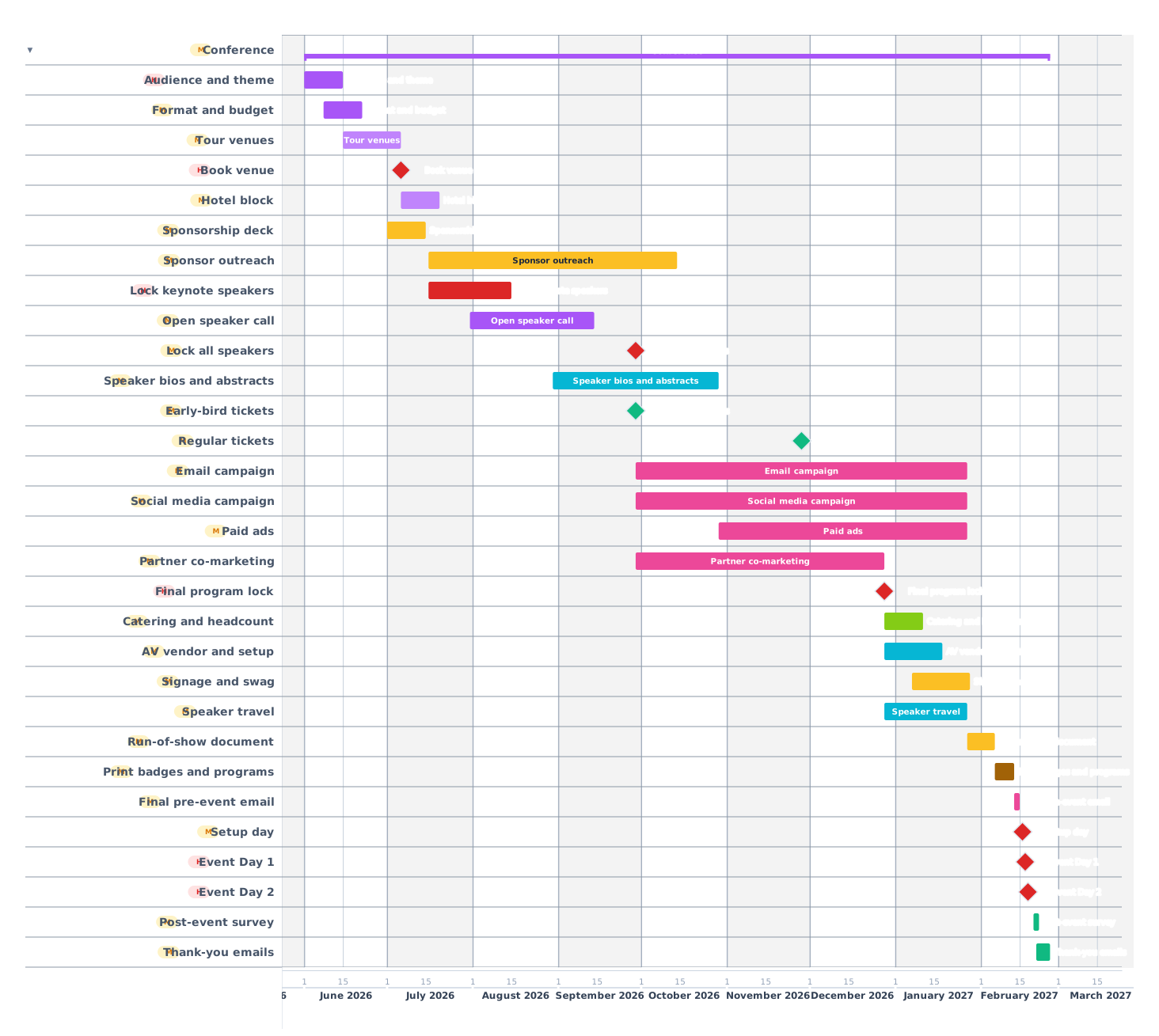
A 9-month conference plan covering venue, sponsors, speakers, ticketing, marketing, AV, run-of-show and post-event, for organizers running an in-person event of 100 to 1,000 attendees.
Conferences are 200+ interlocking deadlines pretending to be one event. Venue contracts have refund cliffs at 60/30/14 days out. Speakers cancel. Sponsors require lead time for booth materials. Hotel blocks fill or release. This 9-month template plans a typical mid-size conference of 100–1,000 attendees, with the long-lead items (venue, sponsors, speakers) at month 1 and the marketing/operations push tightening into the final 8 weeks.
How a 9-month conference plan breaks down
01
Strategy and venue
Months 1–2
Define audience, theme, format (single-track vs. multi-track), expected attendance. Build the budget. Tour and book the venue 6–9 months out for popular venues. Hotel block negotiated at the same time. Lock the date.
Define audience and theme
Format decision
Budget
Tour and book venue
Hotel block
Date locked
02
Sponsors and speakers
Months 2–5
Sponsorship deck (tiers, deliverables, prices). Sponsor outreach. Keynote speakers locked first. They anchor the program. Open call for speakers or curated invites. Speaker management: bios, headshots, talk abstracts, AV requirements.
Sponsorship deck
Sponsor outreach
Lock keynote speakers
Open speaker call (or curated invites)
Speaker bios, headshots, abstracts
Speaker AV requirements
03
Ticketing and marketing
Months 4–8
Early-bird tickets at month 4. Regular tickets at month 6. Marketing campaign: email, social, paid, partnerships. Track sales weekly. If sales lag, additional partner outreach or content marketing in months 5–7. Final-week ticket push usually accounts for 20–30% of total sales.
Early-bird tickets live
Regular tickets live
Email campaign
Social media campaign
Paid ads (if budget)
Partner co-marketing
Weekly sales tracking
Final push (last 2 weeks)
04
Logistics and program
Months 6–8
Final program (sessions, rooms, times). Catering menu and headcount. AV vendor and setup. Signage. Swag and badges. Speaker travel and accommodation. Run-of-show document: minute-by-minute schedule for staff.
Final program lock
Catering and headcount
AV vendor and setup
Signage
Swag and badges
Speaker travel
Run-of-show document
Staff briefing
05
Final 2 weeks
Months 8–9
Final attendee count to venue and caterer. Print badges and programs. Send pre-event email to attendees with logistics. Build event app (or use an existing platform). Walk through the venue 1–2 days before. Setup day.
Final attendee count
Print badges and programs
Pre-event email to attendees
Event app or platform
Venue walkthrough
Setup day
06
Event and follow-up
Month 9
Event days: staff at every entrance, AV crew on every track, registration open through end of day 1. Capture photos and video. Post-event survey within 48 hours. Thank-you emails to attendees, sponsors, and speakers within 1 week. Post-event report and lessons learned.
Event Day 1
Event Day 2
Tear down
Post-event survey (within 48h)
Thank-you emails
Photo and video delivery
Sponsor follow-up
Lessons learned report
Tips from conferences that came in under chaos
01Book the venue 6–9 months out. Popular venues and good dates fill 9–12 months ahead.
02Lock keynote speakers first. They anchor the program and unlock everything downstream.
03Early-bird at 4 months out. Early tickets fund the venue deposit and gauge demand.
04Build the run-of-show document. Minute-by-minute schedules make event-day chaos manageable.
05Send the post-event survey within 48 hours. Memory fades fast; response rate drops 10–20% per week of delay.
Frequently asked questions
How long do I need to plan a conference?
6–12 months for mid-size conferences (100–1,000 attendees). Larger conferences (5,000+) often plan 18+ months out.
What is the single biggest budget category?
Venue + F&B usually 40–60% of budget. AV is 10–20%. Speakers are 5–15% depending on whether you pay or comp.
When should I start selling tickets?
4–5 months out for early-bird. Earlier than that and people forget; later and you miss the early-buyer segment.
 Gantt Chart Maker