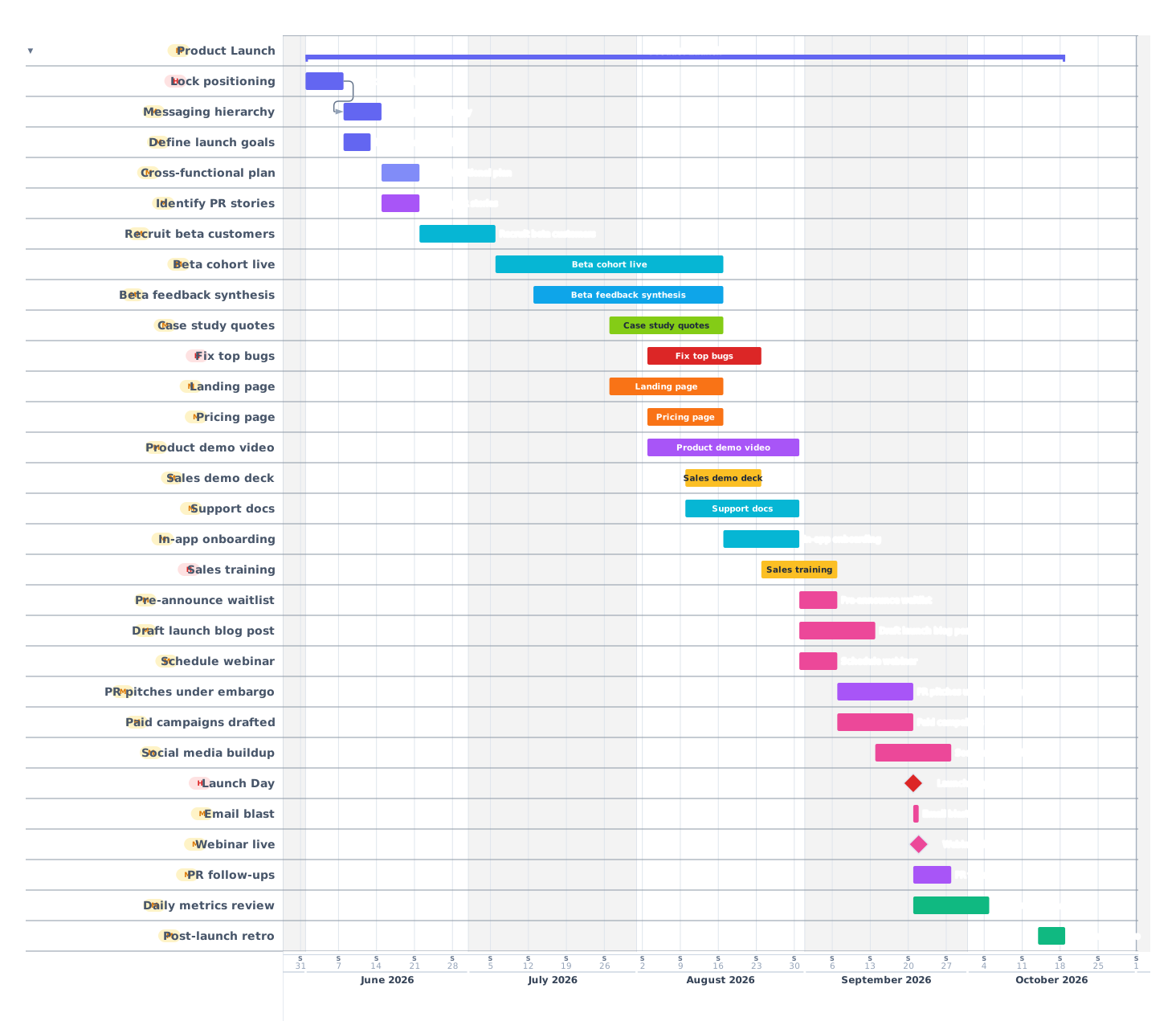
A 16-week product launch plan covering positioning, beta, sales enablement, marketing, PR, launch day and the 30 days after, with the cross-functional dependencies that decide launch quality.
Product launches fail at the seams between teams. Engineering ships on time but marketing was not briefed in time. Sales is not enabled. PR pitches the wrong story. This 16-week template covers a typical B2B SaaS product launch: positioning lock at week 1, beta in weeks 4–10, marketing buildup in weeks 8–15, launch day at week 16, and 30 days of post-launch tracking. Adjust phases to fit consumer or enterprise launches.
How a 16-week launch breaks down
01
Positioning and plan
Weeks 1–3
Lock positioning: who is this for, what does it replace, what is the one thing it does better. Write the messaging hierarchy (one tagline, three value props, ten proof points). Set launch goals: leads, signups, revenue, press mentions. Build the cross-functional plan with owners for every deliverable.
Lock positioning and ICP
Write messaging hierarchy
Define launch goals (KPIs)
Build cross-functional plan
Identify 3 launch stories for PR
02
Beta and feedback
Weeks 4–10
Recruit 10–30 beta customers. Run the product through them for 4–6 weeks. Collect feedback on messaging, pricing, and the actual product experience. Capture 5–10 case study quotes for launch materials. Fix the most-mentioned bugs before launch.
Recruit beta customers (10–30)
Onboard beta cohort
Weekly beta feedback synthesis
Capture case study quotes
Fix top-mentioned bugs
03
Enablement and assets
Weeks 8–13
Build the launch assets in parallel with beta: landing page, product video, demo deck, pricing page, sales battlecard, support docs, in-app onboarding flow. Train sales: sales enablement is the most-skipped step in B2B launches.
Landing page and pricing page
Product demo video
Sales demo deck and battlecard
Support docs and help center
In-app onboarding
Sales training
04
Marketing buildup
Weeks 11–15
Pre-announcement email to existing customers and waitlist. Blog post drafts ready. Webinar scheduled for launch week. PR pitches sent under embargo 1–2 weeks before launch. Social media buildup. Paid campaigns drafted and approved.
Pre-announce to waitlist
Draft launch blog post
Schedule launch webinar
PR pitches under embargo (1–2 weeks out)
Paid campaigns drafted
Social media buildup
05
Launch week
Week 16
Embargo lifts, launch blog post goes live, email blast to full list, social campaign starts, paid campaigns turn on, webinar runs. The CEO posts on LinkedIn. The team is on standby for support questions and PR follow-ups.
Launch blog post live
Email blast (full list)
Social media launch
Paid campaigns live
Webinar
PR follow-ups
06
Post-launch (30 days)
Weeks 17–20
Daily metric review for the first 14 days. Weekly review of pipeline impact. Capture user feedback continuously and triage into the product backlog. Write the post-launch retrospective by day 30: what worked, what slipped, what to do differently for the next launch.
Daily metrics review (14 days)
Weekly pipeline review
Capture user feedback
Triage feedback into backlog
Post-launch retrospective
Tips from launches that landed
01Lock positioning in week 1, not week 8. The whole plan flows from positioning: late changes are expensive.
02Recruit at least 10 beta customers. Fewer than 10 and you do not get the case study quotes or the bug volume you need.
03Train sales 2 weeks before launch, not 2 days. Sales onboarding takes longer than every other team estimates.
04Send PR pitches under embargo 1–2 weeks out. Reporters need lead time.
05Write the retrospective by day 30. By day 60, half the team has moved on and the lessons evaporate.
Frequently asked questions
How long does a product launch take?
B2B SaaS: typically 12–20 weeks of focused work. Consumer products with PR campaigns: often 6 months. This template targets the 16-week middle case.
What is the most-missed step?
Sales enablement. Engineering and marketing get attention; sales training quietly slips and the team is unprepared on launch day.
Should I launch on a Tuesday?
Tuesday, Wednesday, or Thursday morning. Avoid Mondays (news graveyard), Fridays (no follow-up reach), and any major news day.
 Gantt Chart Maker