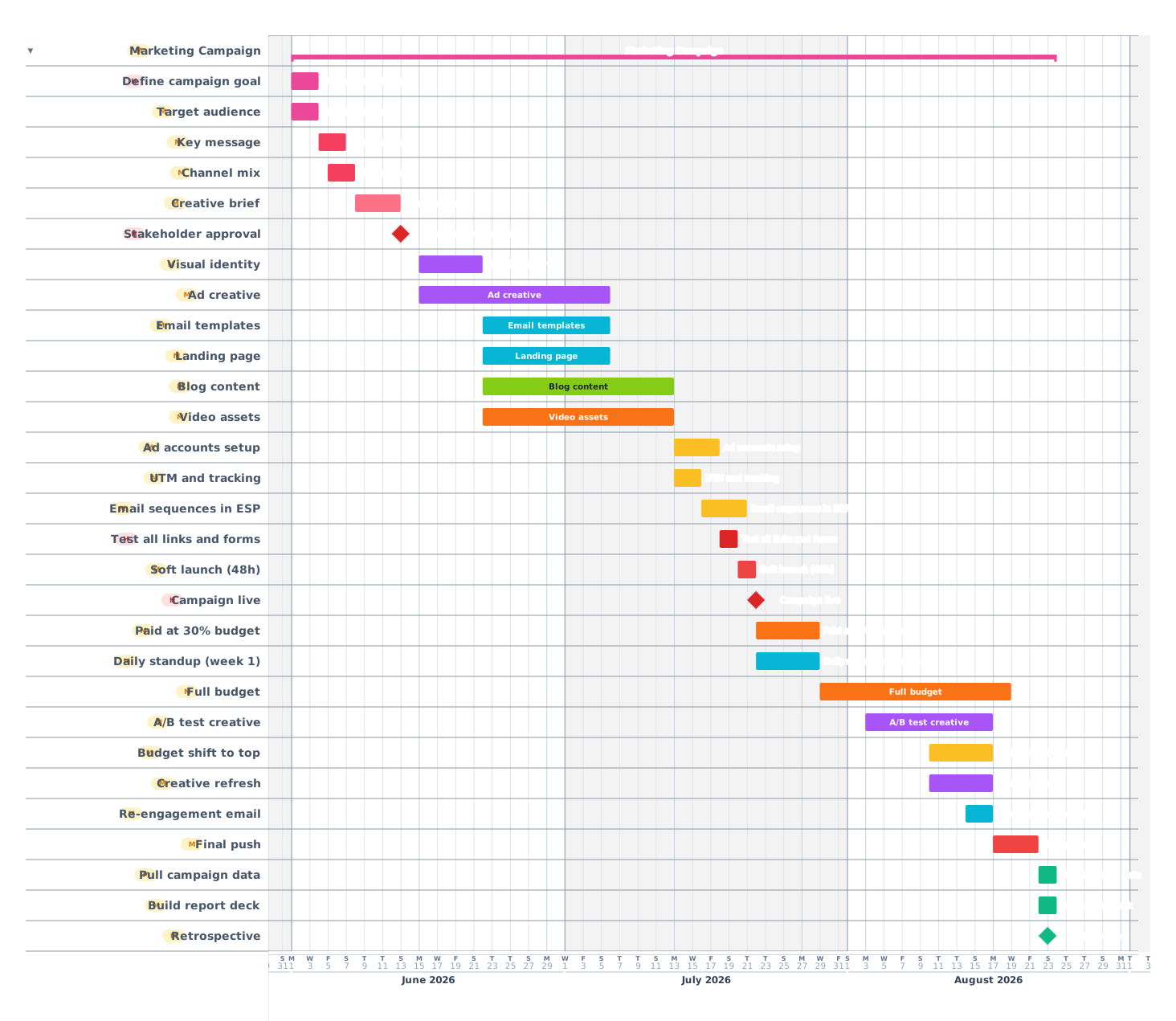
A 12-week integrated marketing campaign covering strategy, creative, channels, launch, optimization and reporting, built around the cadence agencies and in-house teams actually run.
Most marketing campaigns are too ambitious for the timeline they have. A 12-week campaign has roughly 8 weeks of usable work time once you subtract approvals, holidays, and the unavoidable scope creep. This template targets an integrated campaign (paid, email, content, social) for a single product or initiative. The phases reflect the cadence agencies and in-house teams actually run, with realistic approval cycles.
How a 12-week campaign breaks down
01
Strategy and brief
Weeks 1–2
Define campaign goal in one sentence (drive 5,000 trial signups, generate 300 leads, etc.). Identify target audience, single key message, and channel mix. Write the creative brief. Stakeholder review and approval before any creative work begins: chasing approvals after creative is built is the most expensive mistake.
Define campaign goal (1 sentence)
Identify target audience and ICP
Single key message
Channel mix (paid, email, content, social)
Creative brief
Stakeholder approval
02
Creative production
Weeks 3–6
Concepts, drafts, revisions, final. Plan for 2–3 rounds of revision per asset. Production handles: campaign visual identity, ad creative across formats, email templates, landing page, blog content, video assets, social cuts.
Concept development
Campaign visual identity
Ad creative (all formats)
Email templates
Landing page
Blog content
Video assets
Social cuts
03
Setup and pre-flight
Weeks 6–7
Configure ad accounts, tracking, UTMs, conversion pixels. Set up email sequences in the ESP. Build landing page and A/B variants. Test every link, every form, every conversion event. The week before launch is for catching the things that would have been embarrassing to ship broken.
Ad accounts configured
UTM and tracking
Conversion pixels
Email sequences in ESP
Landing page live (dev)
Test all links and forms
04
Launch and ramp
Weeks 8–9
Soft launch first 48 hours to catch issues. Email Day 1, social Day 1, paid campaigns ramped at 20–40% of total budget for the first week to allow optimization data to accumulate. Daily standup for first week to catch problems fast.
Soft launch (first 48 hours)
Email day 1
Social day 1
Paid at 30% budget (week 1)
Daily standup (week 1)
Full budget by day 7
05
Optimize
Weeks 10–11
A/B test creative, audiences, copy. Shift budget to top-performing channels. Refresh top-performing creative: even the best ads fatigue within 2–4 weeks. Send a re-engagement email to people who clicked but did not convert.
A/B test ad creative
A/B test landing page
Audience and copy tests
Budget shift to top channels
Creative refresh
Re-engagement email
06
Wind down and report
Week 12
Last week of paid spend. Final email push. Pull all the data into one report: spend, impressions, clicks, conversions, CAC, revenue impact by channel. Write the campaign retrospective: what worked, what to repeat, what to kill.
Final paid push
Final email push
Pull campaign data
Build report deck
Campaign retrospective
Tips from campaigns that hit
01Get stakeholder approval in week 2. Reworking creative after week 8 is dramatically more expensive than approving earlier.
02Plan for 2–3 revision rounds per asset. Single-round creative is a fiction.
03Start paid spend at 30% of total budget. The first week is for optimization data, not max spend.
04Refresh top-performing creative every 2–4 weeks. Even the best ads fatigue.
05Pull the report within 5 business days of campaign end. Two weeks later, the team has moved on and details fade.
Frequently asked questions
How long should an integrated campaign run?
6–12 weeks for most campaigns. Less than 6 and there is not enough optimization data; more than 12 and creative fatigues.
What is the most-skipped step?
Pre-launch testing of links, forms, and conversion events. The cost of a broken UTM on launch day is usually 50–100% of week 1 budget.
 Gantt Chart Maker