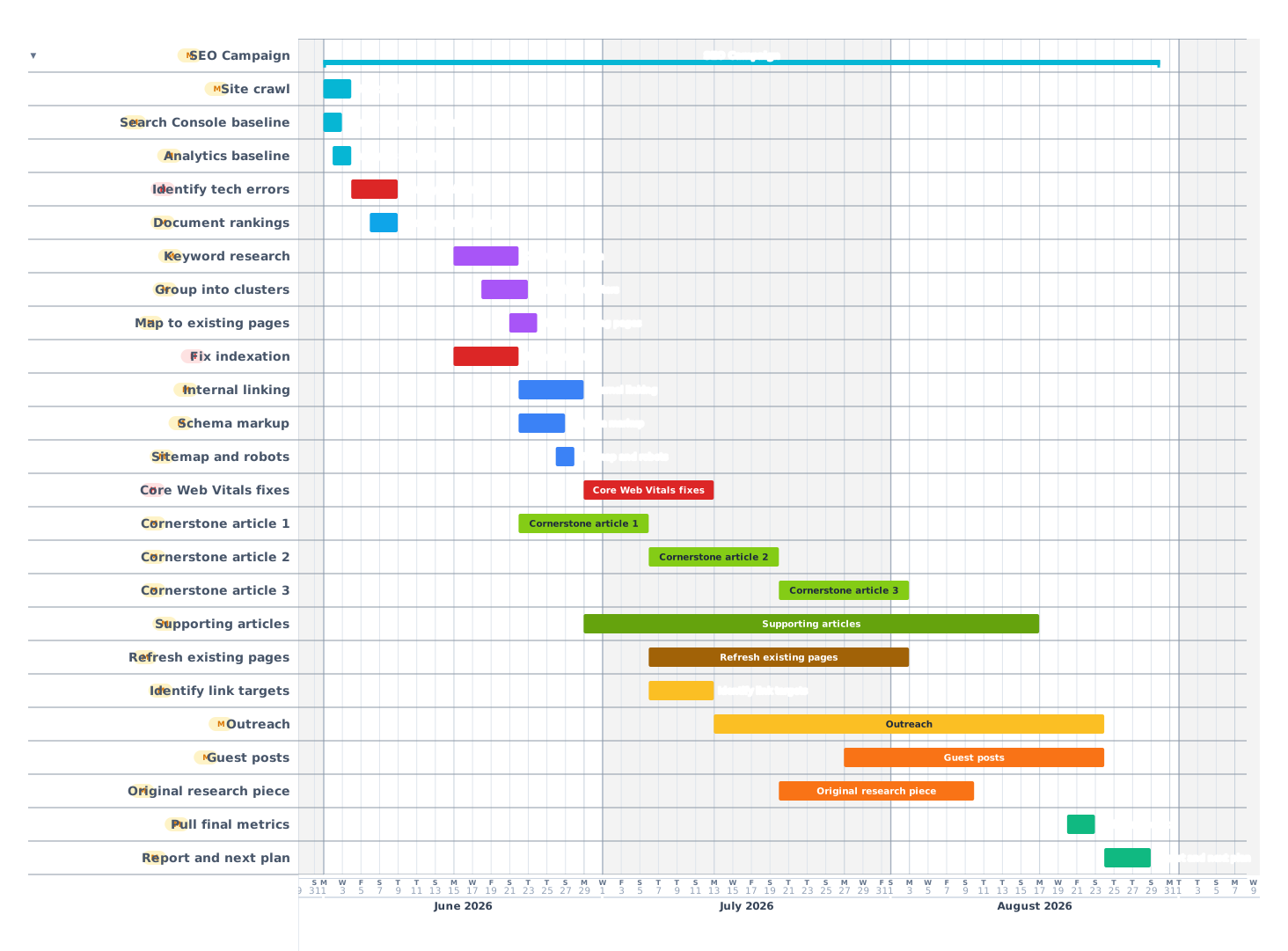
A 90-day SEO plan covering audit, keyword research, technical fixes, content production, backlinks and measurement, with the realistic ramp time SEO actually takes.
SEO is a long game disguised as a marketing channel. A 90-day plan does not get you to page 1 for competitive terms; it gets you to a stable foundation, a working content engine, and the first wave of long-tail rankings. This template covers the work that actually compounds (technical fixes, topical clusters, and an early backlink push) paced to fit a single quarter.
How a 90-day SEO plan breaks down
01
Audit and baseline
Weeks 1–2
Crawl the site (Screaming Frog or similar). Pull Search Console and analytics baselines. Identify technical errors: 404s, redirect chains, indexation issues, Core Web Vitals failures. Document current rankings for target terms. The audit defines the rest of the plan.
Site crawl with Screaming Frog
Search Console baseline
Analytics baseline
Identify technical errors
Document current rankings
02
Keyword research and topical clusters
Weeks 3–4
Build the target keyword list: head terms, long-tail variations, question-based queries. Group into topical clusters (3–5 themes, each with 5–15 supporting articles). The topical cluster model outperforms scattered standalone posts.
Build target keyword list
Group into topical clusters
Map keywords to existing pages
Identify content gaps
Prioritize by intent + volume + difficulty
03
Technical fixes
Weeks 3–6
Fix indexation issues first (anything blocking Google from crawling). Then internal linking, schema markup, sitemap, robots.txt. Address Core Web Vitals. The LCP, INP, and CLS scores that affect ranking. Mobile usability fixes.
Fix indexation errors
Internal linking pass
Schema markup (Organization, Article, FAQ)
Update sitemap and robots.txt
Core Web Vitals fixes
Mobile usability fixes
04
Content production
Weeks 4–11
Produce one cornerstone article per topical cluster (2,500+ words, deeply researched). Then 4–8 supporting articles linking up to the cornerstone. Update underperforming existing pages: refresh is often higher ROI than new content.
Cornerstone article: cluster 1
Cornerstone article: cluster 2
Cornerstone article: cluster 3
Supporting articles (8–12 total)
Refresh underperforming existing pages
Internal link cornerstones to supports
05
Backlinks and outreach
Weeks 6–12
Identify 30–50 link targets: blogs, podcasts, journalists, partner sites. Personalized outreach (mass emails do not work). Guest posts where appropriate. Build digital PR moments: original research, surveys, or strong opinion pieces that earn natural links.
Identify link targets (30–50)
Personalized outreach
2–3 guest post placements
Original research piece
Track new referring domains
06
Measurement and reporting
Weeks 11–13
Pull rankings, organic traffic, conversions, and backlink growth versus baseline. Identify the keywords moving from page 3 to page 2 (next quarter's wins). Write the post-campaign report with the next 90-day plan baked in.
Rankings vs. baseline
Organic traffic and conversions
Backlink growth
Identify page-3-to-2 movers
Next 90-day plan
Tips from SEO programs that worked
01Fix technical issues first. Content on a broken site does not compound; content on a fixed site does.
02Use topical clusters, not scattered posts. One cornerstone with 8 supporting articles outperforms 9 random posts.
03Refresh existing top-performing pages quarterly. Refresh ROI usually beats new content.
04Personalized outreach beats templated outreach 10:1. Spend the extra 5 minutes per pitch.
05Most SEO results show at month 4–6, not month 3. Plan for the long game; report on leading indicators.
Frequently asked questions
How fast does SEO show results?
Long-tail rankings start moving in 8–12 weeks. Competitive head terms take 6–12 months.
How much content per month?
2–4 high-quality articles per month outperform 10–15 thin ones. Quality beats volume at every measurement.
Do I need backlinks?
For competitive terms, yes. For long-tail and niche queries, on-page SEO plus topical authority is often enough.
 Gantt Chart Maker