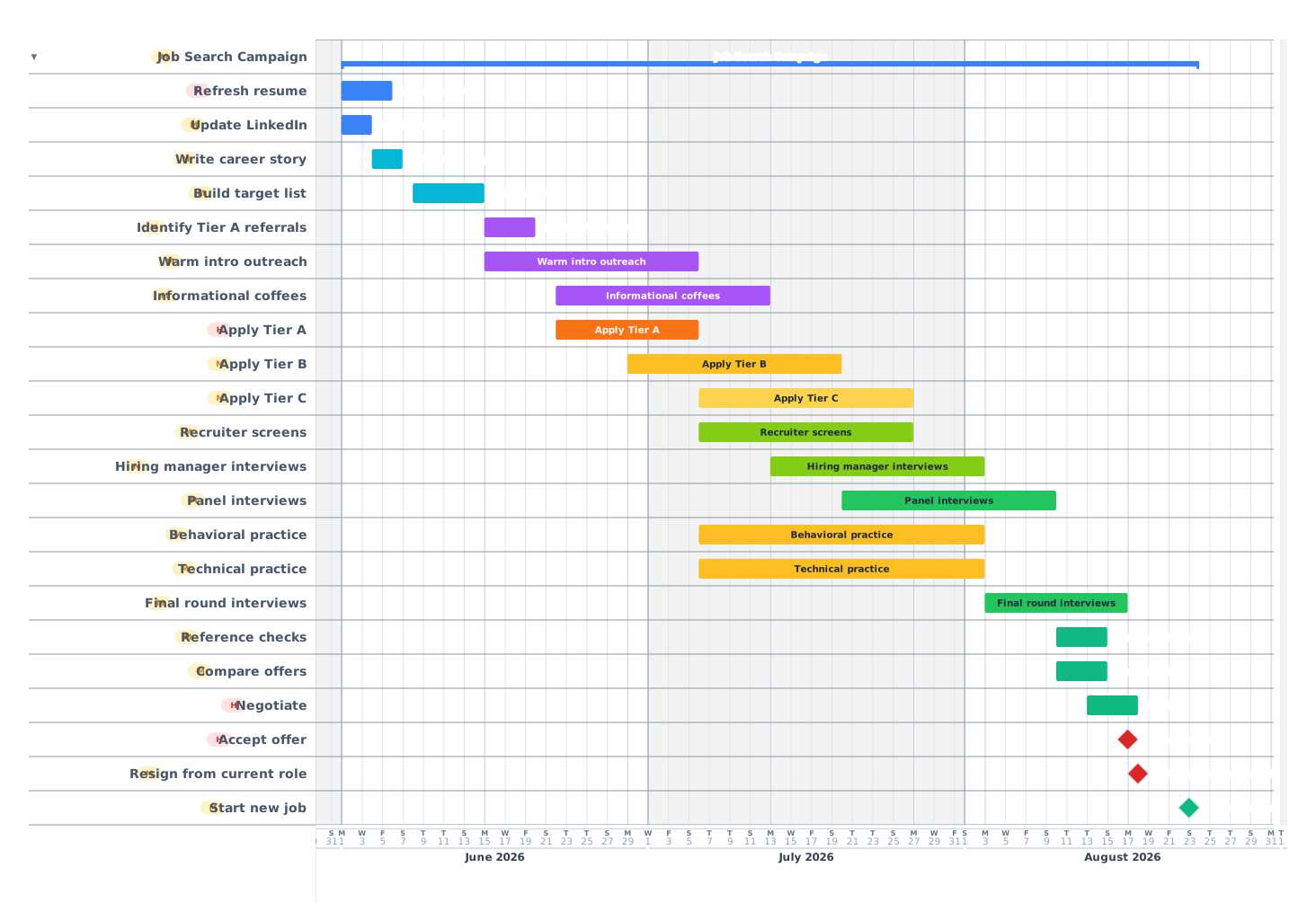
A 12-week job search plan covering resume, portfolio, networking, applications, interviews and offer negotiation, for mid-career professionals running a focused search.
A focused job search rarely happens in one week. Resume tuning takes longer than expected, target lists need a few rounds, and networking conversations compound over weeks. This 12-week template assumes a mid-career professional running a focused search: typically 4–6 target companies of primary interest plus a wider pool for breadth. Adjust the application volume to your seniority level.
How a 12-week job search breaks down
01
Set up
Weeks 1–2
Update resume and LinkedIn. Write a 1-paragraph "career story" you can deliver in any networking conversation. Build a target list of 30–50 companies, broken into Tier A (4–6 dream companies), Tier B (15–20 strong fits), and Tier C (the wider pool for breadth and momentum).
Refresh resume (1–2 pages, ATS-friendly)
Update LinkedIn headline, photo, About section
Write career story (1 paragraph)
Build target company list
Identify 5–10 key roles to apply for
02
Network and warm intro
Weeks 3–5
For each Tier A company, identify 2–3 internal contacts via LinkedIn. Reach out with a tailored note: referrals dramatically outperform cold applications. Have 5–10 informational coffee chats per week. Networking compounds: the 30th person knows what the first 5 did not.
Identify referrals at Tier A companies
Send 5–10 warm intro requests per week
Schedule informational coffees
Follow up within 48 hours of each conversation
03
Apply
Weeks 4–8
Apply to Tier A roles first, with a referral if possible. Then Tier B and Tier C in parallel. Customize the cover letter and resume bullets per role: generic applications waste both your time and the recruiter's. Aim for 5–10 carefully-customized applications per week, not 50 generic ones.
Apply to Tier A roles (with referral)
Apply to Tier B roles
Apply to Tier C roles
Track every application in a spreadsheet
Follow up at 7 and 14 days
04
Interview
Weeks 6–10
Recruiter screens → hiring manager → panel/team → final. Average loop is 4 weeks from first screen to offer. Prepare for behavioral and technical rounds separately: both require practice. Send a thank-you email within 24 hours of every interview.
Recruiter screens
Hiring manager interviews
Panel or team interviews
Final round interviews
Behavioral practice (STAR method)
Technical practice (role-specific)
Thank-you emails (within 24 hours)
05
Offer and negotiate
Weeks 11–12
Compare offers across base, bonus, equity, and benefits. Negotiate base and equity: almost every offer has room. Take 3–5 business days to decide; recruiters expect this. Once accepted, give notice to the current employer with a target start date 2–4 weeks out.
Compare offer packages
Negotiate base, bonus, equity
Reference checks
Accept offer
Resign from current role
Start new job
Tips from successful searches
01Get a referral for every Tier A application. Referrals lift response rate by 5–10x.
02Customize the cover letter and resume bullets per role. Five tailored applications beats fifty generic ones.
03Track every conversation in a spreadsheet: company, contact, status, date, next step. The mental load otherwise becomes the bottleneck.
04Negotiate every offer: almost every offer has room. Recruiters expect it.
05Schedule one rest day per week. Job search is grinding; burnout hurts both quality and your interview presence.
Frequently asked questions
How long does a job search usually take?
Mid-career: 3–6 months. Senior: 4–8 months. Junior: 1–3 months. This template targets the 3-month case.
How many applications per week?
5–10 carefully-customized applications outperform 30–50 generic ones. Quality of fit and customization matter more than volume.
When should I negotiate?
After the verbal offer, before accepting. Almost every offer has 10–20% upside on base or equity.
Open the job search template, fit it to your search horizon, and you have a working 12-week plan with networking, applications, and interview rounds plotted.
 Gantt Chart Maker