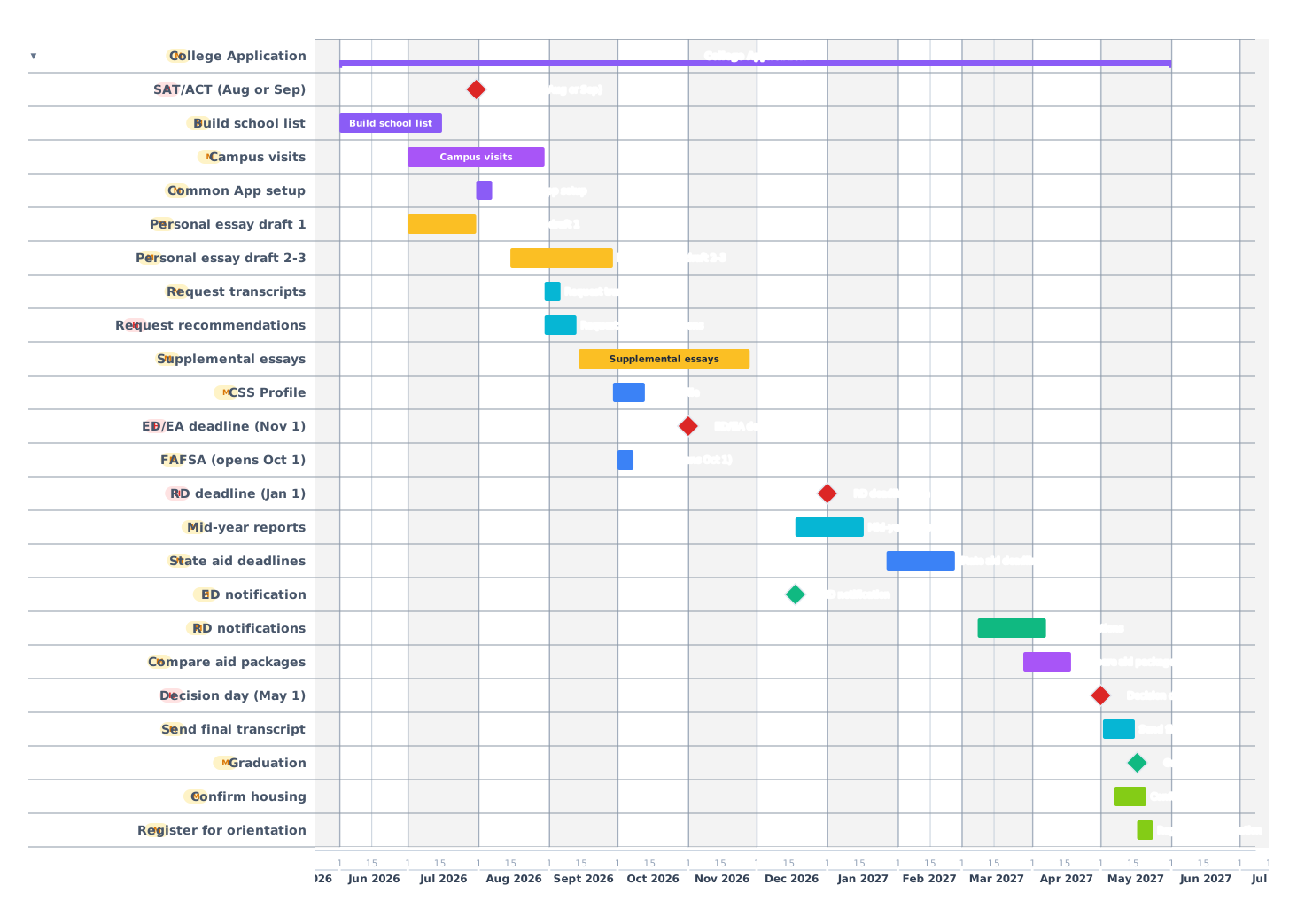
A 12-month college application plan covering SAT/ACT, school list, essays, recommendations, applications, financial aid and decision day, in the deadline-driven sequence US applicants need.
College Application23 tasks · 6 phases · 12 months
About this template
Most college applications fall apart in the same place: essays. Students underestimate how long a polished personal essay takes (drafts, feedback, more drafts), and the November 1 early-decision deadline is suddenly two weeks away. This 12-month template starts the summer before senior year and ends with the May 1 decision deadline. It assumes US Common App with 6–10 schools applied to.
How a 12-month application cycle breaks down
01
Summer before senior year
Months 1–3
Take or retake SAT/ACT: the August or September date is the last useful one for early decision. Build the school list (8–12 schools across reach, target, safety). Visit campuses if possible. Start the Common App personal essay early; the goal is 3–4 drafts before October.
SAT or ACT (August/September)
Build school list (reach/target/safety)
Campus visits
Common App account setup
Personal essay draft 1
02
Early fall: applications open
Months 4–5
Common App opens August 1. Request transcripts and teacher recommendations. Most teachers cap recommendations at 5–10 per year. Ask early in the semester, before they fill up. Personal essay rounds 2–3. Begin supplemental essays for each school (most schools want 2–4 short essays).
Request transcripts from counselor
Request 2–3 teacher recommendations
Personal essay rounds 2 and 3
Begin supplemental essays per school
CSS Profile for financial aid (if applicable)
03
Early decision and early action
Month 6
Early decision and early action deadlines are November 1 or November 15 at most schools. Submit applications, supplemental essays, recommendations confirmed in. Polish supplements for regular-decision schools next.
ED/EA application submission (Nov 1 or Nov 15)
Confirm recommendations submitted
CSS Profile and FAFSA submitted
Polish RD supplements
04
Regular decision push
Months 7–8
Most regular-decision deadlines are January 1 or January 15. Submit applications to remaining schools. FAFSA opens October 1: submit as early as possible (federal aid is partly first-come). State aid deadlines vary widely; some are as early as March 1.
RD applications submitted (Jan 1 or Jan 15)
FAFSA submitted
State aid applications
Send mid-year reports
05
Decisions and choice
Months 9–11
ED notifications mid-December. EA mid-December to February. RD notifications March to early April. Compare financial aid packages (negotiate if needed). Final decision and deposit due May 1. The universal decision day in US admissions.
ED notification (mid-December)
RD notifications (March–April)
Compare financial aid packages
Final decision and deposit (May 1)
Send final transcript to chosen school
06
Graduation and prep
Month 12
High school graduation. Confirm housing at the chosen school. Register for orientation. Apply for AP credit if applicable. Pack for college.
High school graduation
Confirm housing
Register for orientation
AP credit submission
Pack for college
Tips from successful applications
01Ask teachers for recommendations early: September of senior year at the latest. Good teachers cap at 5–10 letters and fill up.
02Plan 3–4 drafts of the personal essay. The first draft is almost never the version that gets submitted.
03Submit FAFSA the week it opens (October 1). Some federal aid is partly first-come.
04Build the school list around realistic admit rates. Six target schools, two reaches, two safeties, not eight reaches.
05Keep one shared spreadsheet of every deadline. The hardest part of application season is tracking which essay goes to which school.
Frequently asked questions
When should I take the SAT or ACT?
First attempt spring of junior year (April–June), retake August or September of senior year if needed. October is the last useful test date for early decision.
How many schools should I apply to?
6–10 is the typical range. More than 12 stretches essay quality; fewer than 5 narrows options too far.
How early should I start essays?
Personal essay: June or July before senior year. Supplemental essays: August or September.
 Gantt Chart Maker