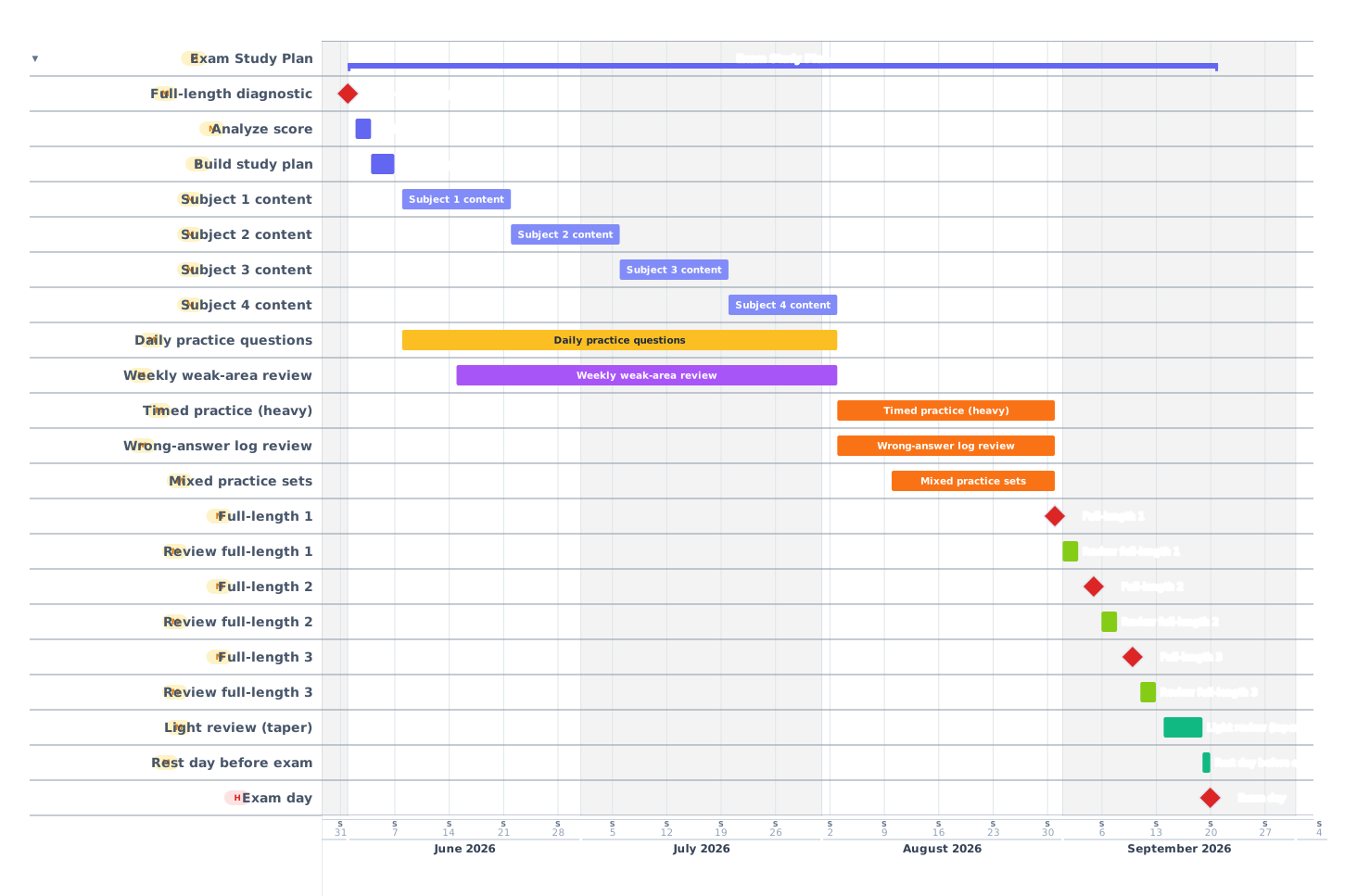
A 16-week study plan for major exams (Bar, MCAT, GRE, CPA, professional certifications), covering diagnostic, content review, practice, full-lengths and the final two-week taper.
Most major exams (Bar, MCAT, GRE, CPA, USMLE Step) reward a structured 12–20 week study plan. Less than 12 weeks and you cannot get through all the content; more than 20 and burnout sets in. This 16-week template covers diagnostic, content review, spaced practice, full-length practice exams, and the critical final 2-week taper. Adjust the subject mix to your specific exam.
How a 16-week exam plan breaks down
01
Diagnostic and plan
Week 1
Take a full-length diagnostic exam under timed conditions. This sets your baseline and reveals weak areas. Build the study plan based on the gap between your diagnostic score and your target. Buy the prep materials, usually one main course plus a question bank.
Take full-length diagnostic
Analyze score by subject
Build week-by-week plan
Buy main course and question bank
02
Content review (foundation)
Weeks 2–8
Work through every subject systematically. Aim for 4–6 hours per day, 5–6 days per week. Take notes by hand: research consistently shows handwritten notes outperform typed for retention. End each subject block with 50–100 practice questions to lock the concepts.
Subject 1 deep dive
Subject 2 deep dive
Subject 3 deep dive
Subject 4 deep dive
Daily practice questions (50–100/day)
Weekly review of weak areas
03
Practice and weak-area work
Weeks 9–12
Shift from content review to heavy practice. Do 100–150 timed questions per day. Track wrong answers in a spreadsheet: go back over them every 3 days for two weeks. The questions you missed two weeks ago should be questions you get right today.
Daily timed practice (100–150 questions)
Track wrong-answer log
Review wrong-answer log every 3 days
Weak-area re-review
Mixed-subject practice sets
04
Full-length practice exams
Weeks 13–14
Take 3–4 full-length practice exams under realistic timed and physical conditions. Use the same time of day as your real exam. After each one, do a detailed review: every question, not just the missed ones. The full-length practice is where you discover pacing problems before the real day.
Full-length exam 1 (then review)
Full-length exam 2 (then review)
Full-length exam 3 (then review)
Pacing strategy refinement
05
Taper and exam
Weeks 15–16
The final two weeks are about taper: reduce study volume so you walk in fresh. Last full-length 8–10 days before the exam. After that, light review only. Two days before: rest. Day before: brief skim, light exercise, normal sleep. Exam day: arrive 30 minutes early.
Final full-length (8–10 days out)
Light review only
2 days before: rest
Day before: skim and rest
Exam day
Tips from people who passed on the first attempt
01Take the diagnostic exam in week 1, not week 4. The whole plan should be built around your gap to target.
02Track every wrong answer in a spreadsheet. The questions you miss are the questions you have to drill.
03Take full-lengths at the same time of day as your real exam. Pacing depends on circadian rhythm.
04Taper for 5–7 days before the exam. Cramming the last week reliably hurts scores.
05Get 7–8 hours of sleep the last two nights. Sleep is the single most underrated study tool.
Frequently asked questions
Is 16 weeks the right amount of time?
For most major exams, yes. The Bar is often 8–12 weeks of full-time study; the MCAT is 4–6 months; the CPA is 12–18 months across 4 sections.
How many practice questions are enough?
For high-stakes exams: 2,000–4,000 questions total, with detailed review of misses.
Should I study every day?
Most plans work best with 5–6 study days per week and 1–2 full rest days. Burnout in week 12 kills scores.
 Gantt Chart Maker