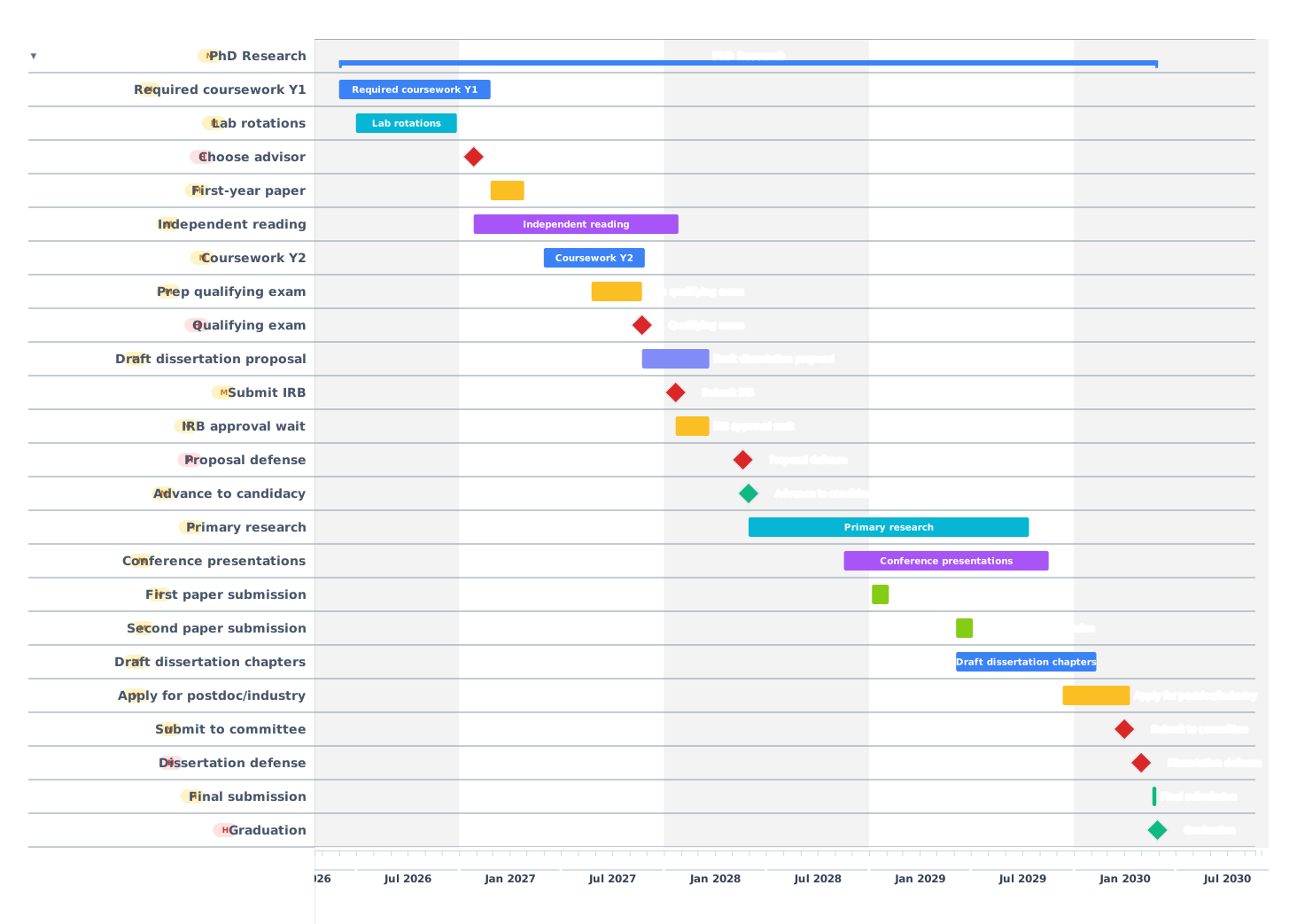
A 4-year PhD timeline covering coursework, qualifying exams, proposal, research, papers and the dissertation defense, built around the milestones the graduate school actually enforces.
A PhD timeline is dominated by 6 fixed milestones: coursework completion, qualifying exam, proposal defense, candidacy, dissertation defense, and submission. Everything else flexes to fit those. This 4-year template lays out a typical STEM PhD with the milestone gates at the right points and realistic chunks of time for the long stretches of research and writing in between.
How a 4-year PhD breaks down
01
Year 1: Coursework and lab rotations
Months 1–12
Required courses, lab rotations (STEM), and selecting an advisor. Most programs require students to choose a primary advisor by the end of year 1. Begin reading deeply in the proposed area. Most universities also have a first-year exam or paper requirement.
Required coursework
Lab rotations (STEM only)
Choose primary advisor
First-year exam or paper
Start independent reading in area
02
Year 2: Qualifying exam and proposal
Months 13–24
Continue coursework (often half-time). Prepare for and take the qualifying exam. The format varies widely (written exam, oral exam, comprehensive paper). Begin drafting the dissertation proposal. Submit IRB if your research needs it.
Finish required coursework
Prepare for qualifying exam
Take qualifying exam
Draft dissertation proposal
Submit IRB or ethics application
03
Year 3: Proposal defense and research
Months 25–36
Defend the dissertation proposal. The second milestone gate. Pass to advance to candidacy ("ABD" status). Begin primary data collection or experimental work. Submit a first paper for publication. Most successful PhDs publish 2–4 papers from their dissertation work.
Proposal defense
Advance to candidacy
Primary data collection or experiments
Conference presentations
First paper submission
04
Year 4: Write and defend
Months 37–48
Continue research, write papers, and start drafting the dissertation. Defend the dissertation. The final milestone. Submit per university template. Apply for postdocs, faculty positions, or industry roles starting at month 42 (academic job market timing).
Finish data collection
Draft dissertation chapters
Submit additional papers
Apply for postdoc or industry roles
Dissertation defense
Final submission and graduation
Tips from finished PhDs
01Choose an advisor by month 6. The PhD is harder to finish than it looks; the advisor relationship matters more than the topic.
02Submit papers as you go: do not save them all for year 4. The first submission teaches you everything; you want that learning to happen early.
03Track every experiment in a structured lab notebook. Future you and your defending committee will need to retrace decisions.
04Start writing the dissertation in year 3, not year 4. Chapters are easier to write while the work is fresh.
05Network at conferences from year 2 onward. The postdoc job market opens in year 4: relationships built earlier are more valuable.
Frequently asked questions
How long does a PhD actually take?
4–7 years for STEM; 5–8 years for humanities and social sciences. This template targets the 4-year STEM case.
When should I take the qualifying exam?
End of year 2 in most programs. Some allow earlier. The exam format varies. Check your specific program.
How many papers should I publish during my PhD?
STEM expectation is typically 2–4 first-author papers. Humanities is often 1 polished paper plus the dissertation.
Open the PhD template, fit it to your program's milestones, and you have a working 4-year plan that respects the gates the graduate school actually enforces.
 Gantt Chart Maker