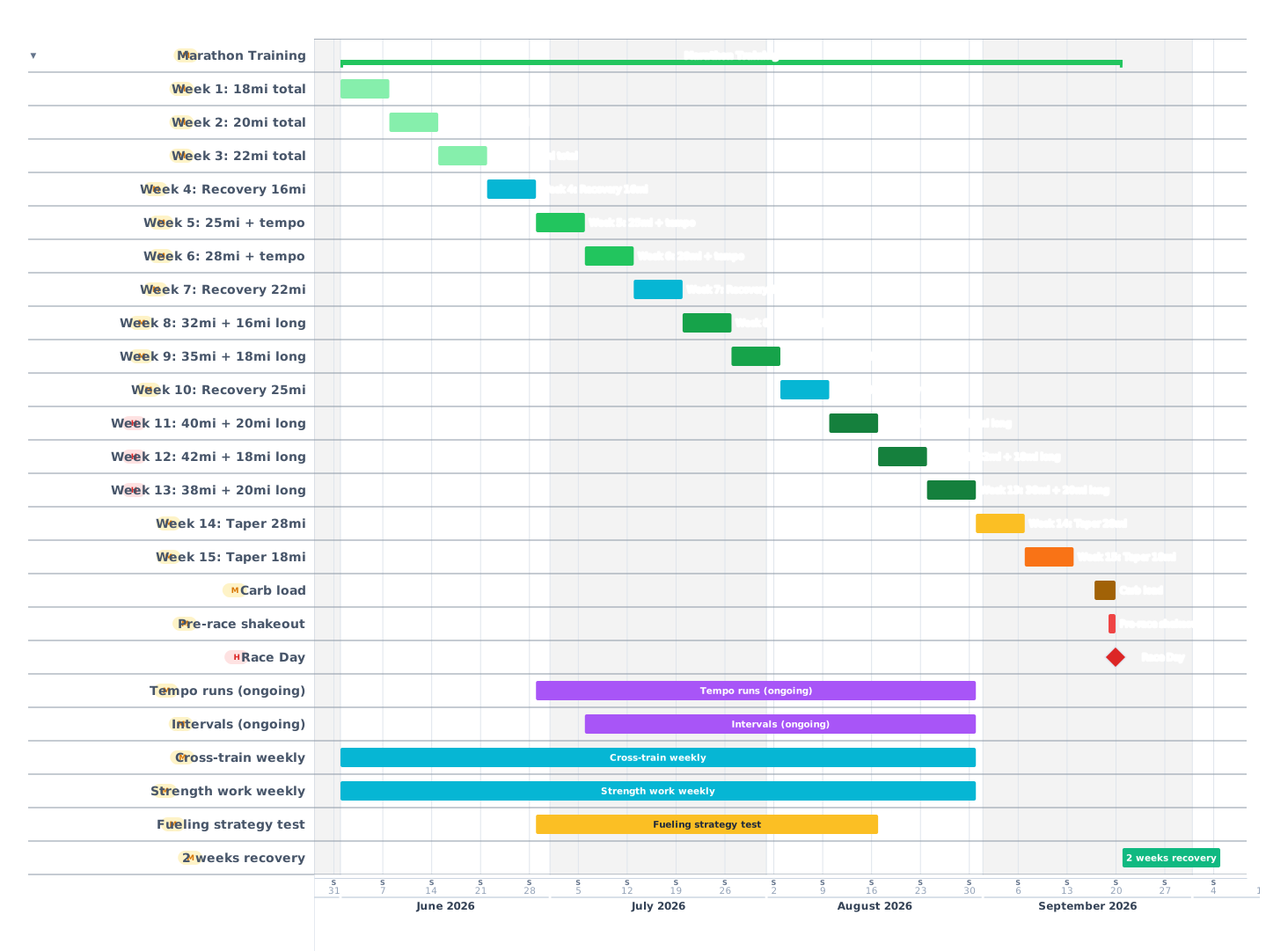
A 16-week marathon training plan covering base building, long runs, speed work, taper and race day, with the weekly mileage progression that prevents the injuries that derail most first marathons.
First marathons fail in week 10 from injury, not race day from underfitness. Mileage progression is the safety mechanism: increase weekly mileage by no more than 10% week over week, with a recovery week every 4 weeks. This 16-week template builds from a base of 15–20 miles per week to a peak of 35–45 miles per week, then tapers for the final 2 weeks. Adjust mileage to your starting fitness, and pace yourself off the long run rather than the speed sessions.
How a 16-week marathon plan breaks down
01
Base building
Weeks 1–4
Build the aerobic base. 4 runs per week at easy conversational pace. Long run grows from 8 miles to 12 miles. Total weekly mileage from 18 to 25 miles. Cross-train (cycling, swimming, yoga) 1–2 times per week. The goal of these 4 weeks is uninjured progression, not speed.
Easy runs (4 per week)
Long run grows 8mi → 12mi
Cross-train 1–2x/week
Strength work 1x/week
Recovery week 4
02
Build to peak
Weeks 5–10
Introduce speed work: one tempo run and one interval session per week. Long run continues growing, peaking at 20 miles in week 10. Pay attention to nagging pains; minor injuries in this phase become major ones in week 14. Hydration and fueling strategies tested during long runs.
Tempo run 1x/week
Intervals 1x/week
Long run grows to 20mi
Fueling strategy on long runs
Recovery weeks 7 and 10
03
Peak weeks
Weeks 11–13
Highest mileage of the plan. Long run stays at 18–20 miles. One quality speed session per week. This is where the body is being asked the most: sleep, nutrition, recovery matter more than ever. Race-pace miles in some sessions to dial in goal pace.
Highest weekly mileage
Long run 18–20mi
Race-pace miles
Sleep and recovery priority
04
Taper
Weeks 14–15
Reduce mileage by 25% in week 14, another 35% in week 15. Speed work stays in to keep legs sharp, just shorter. Avoid new shoes, new fuel, or new stretches. Trust the work; the fitness is already built.
Reduce mileage 25% week 14
Reduce mileage 35% week 15
Short speed sessions
Race-day logistics planned
Carb load (3 days out)
05
Race week and recovery
Week 16
Easy runs early in the week, last run 2 days before race. Carb load starting 3 days out. Lay out kit the night before. Race day. Pace conservatively the first half, push the second half if legs feel good. Recovery: 2 weeks easy or off, then resume training if continuing to race.
Easy runs week of
Last run 2 days out
Carb load (3 days out)
Pre-race shakeout
Race day
2 weeks recovery
Tips from finished marathons
01Increase weekly mileage by no more than 10% week-over-week. The 10% rule is the single biggest injury prevention tool.
02Take a recovery week every 4 weeks. The plan must include reduction; otherwise the body never adapts.
03Test fueling on long runs. Race day is not the day to find out an energy gel does not agree with you.
04Trust the taper. Tapering feels wrong but the fitness is already built.
05Pace conservatively the first 13 miles. Going out too fast is the #1 cause of bad marathon finishes.
Frequently asked questions
How long should I train for a first marathon?
16–20 weeks is the recommended range for first-time marathoners with a running base. Less than 14 weeks risks injury; more than 24 risks burnout.
What is the most common injury?
IT band syndrome, plantar fasciitis, and runner's knee. Most are overuse injuries from increasing mileage too fast.
Should I run all four runs at the same pace?
No. Easy runs should be conversational pace; tempo runs should be comfortably hard; intervals are hard. Mixing intensity is what builds different physiological systems.
 Gantt Chart Maker